
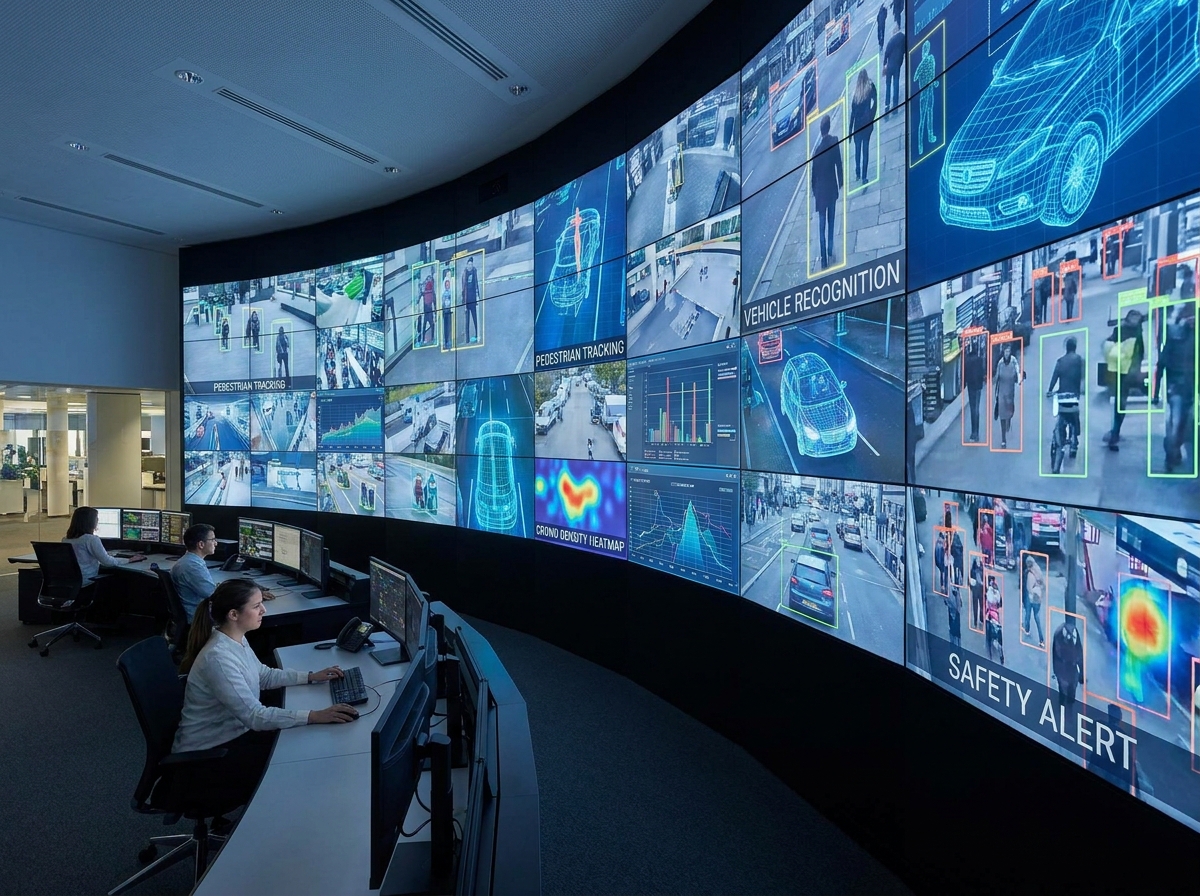
Modern surveillance is no longer limited to recording video footage. Businesses today require intelligent systems that can interpret what is happening in real time and turn raw visuals into actionable insights. This is where Advanced AI Video Analytics is reshaping security and operations, especially in areas like foot traffic measurement and intrusion detection.
By combining computer vision, machine learning, and deep learning models, AI-powered surveillance systems are transforming CCTV networks into intelligent monitoring ecosystems. These systems not only enhance security but also provide valuable business intelligence for retail, commercial buildings, warehouses, and public infrastructure.
Understanding Advanced AI Video Analytics
Advanced AI Video Analytics refers to the use of artificial intelligence technologies to automatically analyze and interpret video data from surveillance cameras. Unlike traditional CCTV systems that rely on human operators, AI-driven systems process video streams in real time and extract meaningful insights.
This includes detecting people, tracking movement, identifying unusual behavior, and measuring traffic patterns across different zones. The system continuously learns from data, improving accuracy and performance over time.
At its core, Advanced AI Video Analytics helps organizations move from reactive monitoring to proactive intelligence.
Foot Traffic Analysis with AI Video Analytics
One of the most powerful applications of Advanced AI Video Analytics is foot traffic analysis. Understanding how people move within a space is essential for businesses that want to optimize layouts, improve customer experience, and increase revenue.
Customer Flow Tracking
AI Video Analytics enables businesses to track how customers move through physical environments such as retail stores, malls, airports, and exhibition centers. By analyzing entry and exit points, dwell times, and movement patterns, organizations can understand customer behavior at a granular level.
This helps businesses identify high-traffic zones, underutilized areas, and bottlenecks that affect customer flow.
Heatmap Generation
Advanced AI Video Analytics systems generate heatmaps that visually represent foot traffic density across a location. These heatmaps highlight areas where customers spend the most time and areas that are frequently ignored.
Retailers use this data to strategically place products, promotional displays, and signage in high-engagement zones to maximize visibility and sales.
Queue and Wait Time Analysis
Long queues can negatively impact customer satisfaction. AI Video Analytics monitors queue lengths and waiting times in real time, helping businesses allocate staff more efficiently.
For example, supermarkets and banks use AI Video Analytics to open additional service counters when congestion is detected, improving overall customer experience.
Conversion Rate Optimization
By combining foot traffic data with sales data, businesses can measure conversion rates more accurately. AI Video Analytics helps answer key questions such as how many visitors enter a store versus how many make a purchase.
This insight enables data-driven decisions that improve store performance and profitability.
Intrusion Detection Using AI Video Analytics
Security remains one of the most critical applications of Advanced AI Video Analytics. Traditional CCTV systems often rely on manual monitoring, which can lead to delays in identifying threats. AI-powered intrusion detection systems provide real-time alerts and automated responses.
Perimeter Security Monitoring
AI Video Analytics enhances perimeter security by continuously monitoring restricted zones. If a person or vehicle crosses a defined boundary, the system instantly triggers an alert.
This is especially useful for warehouses, industrial sites, data centers, and government facilities where unauthorized access can lead to serious risks.
Object and Motion Detection
Advanced AI Video Analytics can differentiate between normal movement and suspicious activity. It reduces false alarms by distinguishing humans from animals, vehicles, or environmental factors like shadows and lighting changes.
This intelligent filtering ensures that security teams only respond to genuine threats.
Loitering Detection
Loitering detection identifies individuals who remain in restricted or sensitive areas for longer than expected. This feature is particularly valuable in banking environments, ATMs, and retail stores where suspicious lingering behavior may indicate potential threats.
Real-Time Alerts and Automation
When an intrusion is detected, AI Video Analytics systems immediately send alerts through dashboards, mobile apps, or security systems. Some advanced setups can also trigger automated responses such as activating alarms, locking doors, or redirecting cameras.
This rapid response capability significantly reduces the risk of security incidents escalating.
Benefits of Advanced AI Video Analytics
Organizations across industries are adopting AI Video Analytics due to its wide range of benefits in both security and business operations.
Improved Operational Efficiency
By automating surveillance tasks, AI Video Analytics reduces the need for constant human monitoring. Security teams can focus on critical incidents rather than watching multiple camera feeds.
This improves productivity and ensures better use of human resources.
Enhanced Decision-Making
AI Video Analytics provides detailed insights that support strategic decision-making. Businesses can analyze patterns in foot traffic and security incidents to improve planning and resource allocation.
For example, retailers can adjust store layouts based on customer movement patterns, while facility managers can redesign spaces to reduce congestion.
Reduced Security Risks
Intrusion detection systems powered by AI Video Analytics significantly reduce response time to threats. Early detection allows security teams to take preventive action before incidents escalate.
This proactive approach improves overall safety and reduces potential losses.
Cost Savings
By minimizing manual surveillance and preventing security breaches, AI Video Analytics helps organizations reduce operational and security-related costs.
It also reduces losses from theft, vandalism, and inefficiencies in workforce management.
Applications Across Industries
Advanced AI Video Analytics is being widely adopted across multiple industries due to its flexibility and scalability.
Retail Industry
Retailers use AI Video Analytics to analyze customer behavior, improve store layouts, and increase sales. Foot traffic insights help optimize product placement, while intrusion detection protects against theft and unauthorized access.
Manufacturing and Warehousing
Manufacturing plants use AI Video Analytics to monitor production lines, ensure safety compliance, and track worker movement. Intrusion detection helps secure restricted zones containing sensitive equipment or materials.
Smart Buildings and Offices
Corporate offices use AI Video Analytics to manage occupancy levels, monitor entry points, and enhance workplace security. Foot traffic analysis helps optimize space utilization and energy efficiency.
Transportation Hubs
Airports, bus terminals, and train stations rely on AI Video Analytics to monitor passenger flow, detect unauthorized access, and ensure safety compliance in high-density environments.
Public Infrastructure
Cities are increasingly using AI Video Analytics for smart surveillance systems. Applications include crowd monitoring, public safety management, and emergency response coordination.
Challenges in Implementing AI Video Analytics
While AI Video Analytics offers significant advantages, organizations must address several challenges during implementation.
Data Privacy and Compliance
Video surveillance involves sensitive data, especially when facial recognition or tracking is used. Organizations must comply with privacy regulations and ensure ethical use of AI Video Analytics systems.
Infrastructure Limitations
Older CCTV systems may require upgrades to support AI Video Analytics. High-quality cameras, sufficient storage, and stable network connectivity are essential for optimal performance.
Environmental Factors
Lighting conditions, camera angles, and video quality can impact the accuracy of AI Video Analytics. Poor visibility may lead to reduced detection accuracy or false alerts.
Integration Complexity
Integrating AI Video Analytics with existing security systems, access control, and business intelligence tools can be complex. Proper planning and system design are essential for successful deployment.
Future of Advanced AI Video Analytics
The future of AI Video Analytics is driven by advancements in artificial intelligence, edge computing, and cloud-based processing. Systems are becoming faster, more accurate, and more scalable.
Edge AI will allow video processing directly on cameras, reducing latency and improving real-time decision-making. This will be particularly important for intrusion detection systems that require instant responses.
In addition, integration with IoT devices and smart sensors will enable more comprehensive environmental awareness. Businesses will be able to combine video data with other data sources for deeper insights.
As AI models continue to evolve, Advanced AI Video Analytics will become an essential part of modern infrastructure, supporting both security and business intelligence at a global scale.
Conclusion
Advanced AI Video Analytics is redefining how organizations approach surveillance, security, and operational intelligence. By combining foot traffic analysis with intrusion detection, businesses gain a powerful tool that enhances both safety and performance.