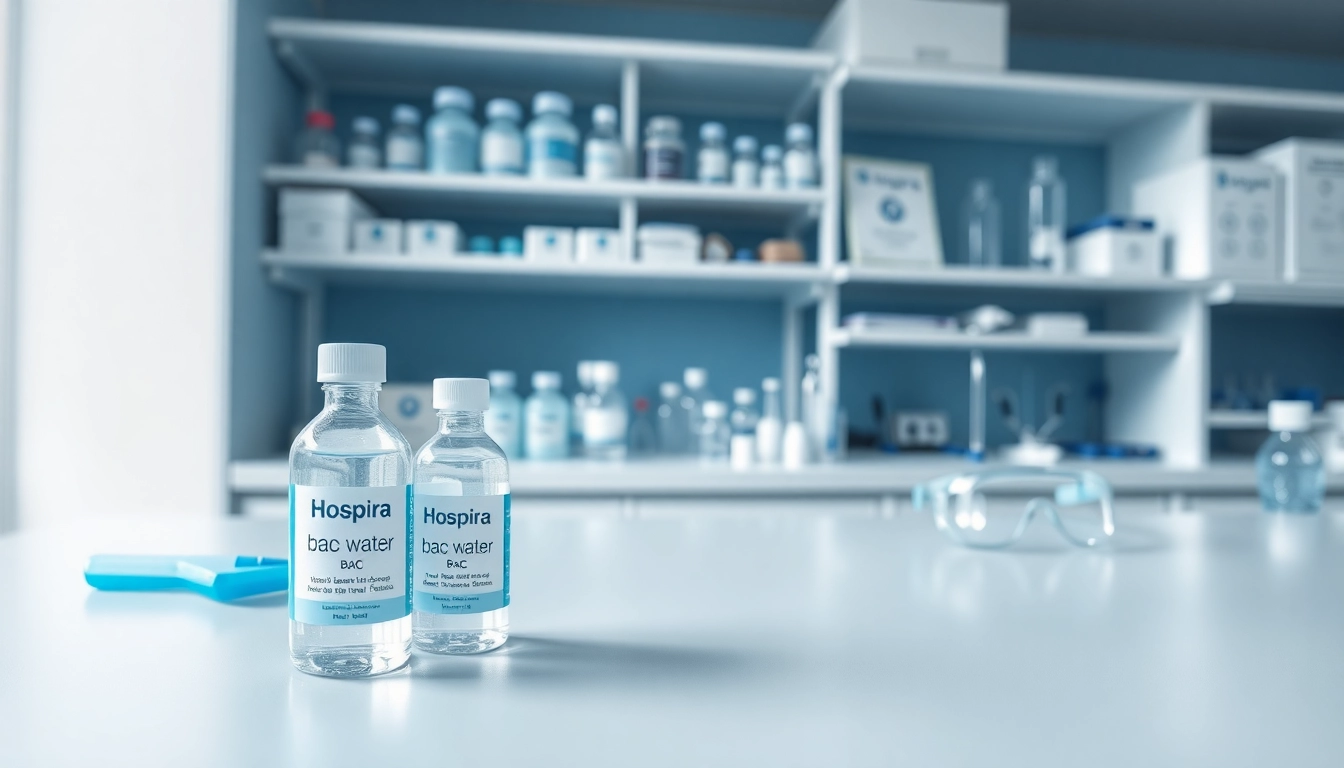
What are Bacteriostatic Solutions?
Definition and Purpose
Bacteriostatic solutions are sterile water-based solvents that contain additives designed to inhibit the growth of bacteria without necessarily killing them. The primary purpose of these solutions is to serve as diluents for injectable drugs, allowing researchers and healthcare professionals to prepare medications without using a preservative that might interfere with the drug's efficacy. This is particularly crucial in research involving sensitive compounds like peptides.
Common Ingredients
Typically, bacteriostatic solutions include benzyl alcohol, which acts as a bacteriostat. The addition of this compound helps extend the shelf life of these preparations by preventing bacterial growth. The absence of other preservatives makes bacteriostatic solutions ideal for those compounds that can be adversely altered by such additives. Buffered saline and other sterile agents can also be used, depending on the specific needs of the preparation.
Application in Research
In research contexts, bacteriostatic solutions are invaluable for maintaining the stability of biological samples and drugs during experiments. Their use ensures that contaminants do not compromise the results or the integrity of the compounds being studied. This is particularly relevant in peptide research, where the purity of the solution can critically affect experimental outcomes and data reliability.
How Hospira Bac Water Enhances Peptide Stability
Properties of Bacteriostatic Water
The properties of bacteriostatic water, particularly hospira bac water, centers around its ability to create a sterile environment that preserves the integrity of various compounds. Its low toxicity and ability to maintain biological activity in peptides make it a preferred choice among researchers. The water remains stable under room temperature conditions, allowing for easier handling and application in various laboratory settings.
Interaction with Research Peptides
When peptides are reconstituted with bacteriostatic water, several benefits are observed. The water not only facilitates the dissolution of the peptide but also provides an anaerobic environment that can help maintain its structural integrity. Studies have shown that peptides are vulnerable to degradation in the presence of certain environmental factors. By using hospira bac water, researchers can minimize this risk significantly, thereby extending the effective lifespan of their compounds.
Storage and Handling Recommendations
For optimal preservation, bacteriostatic water should be stored in a cool, dark place, away from direct sunlight. Once opened, it is recommended to use the solution within 28 days, as the lack of a true preservative means that the risk of contamination increases after the seal is broken. Additionally, aseptic techniques should be followed diligently during use to prevent any microbial introduction.
Best Practices for Using Bacteriostatic Water
Preparation Techniques
When preparing a peptide solution, it is essential to dilute the peptide powder with bacteriostatic water carefully. Researchers should use a sterile syringe and needle to extract the most appropriate amount of water to ensure a clean environment. Gently swirling (instead of shaking) the vial can help dissolve the peptide adequately without risking denaturation, which can occur due to excess agitation.
Dosing Guidelines
To achieve accurate dosing, it is crucial to adhere to established guidelines for both the peptide and bacteriostatic water ratios. This often involves using a calculated volume based on the peptide’s concentration and desired final concentration. Researchers should consult relevant literature and product specifications to determine the best dosing strategies, as too high or too low a concentration can lead to ineffective results.
Common Mistakes to Avoid
Mistakes in handling bacteriostatic solutions can lead to invalid results or health risks. Some of the common pitfalls include failing to work under sterile conditions, not checking the compatibility of the bacteriostatic water with specific peptides, and storing the solution improperly after opening. Additionally, it’s essential to pay attention to expiration dates and discard solutions that have been open for too long or exhibit discoloration.
Benefits of Bacteriostatic Water in Peptide Research
Long-term Storage Advantages
Using bacteriostatic water offers notable advantages when it comes to long-term storage of peptides. The presence of benzyl alcohol allows for extended usability compared to normal sterile water, which is crucial for peptides that are often produced in bulk. This capacity for longer-term storage without significant degradation means researchers can manage inventory costs and time efficiently.
Cost-Effectiveness
Utilizing bacteriostatic water can also provide economic benefits. The ability to reconstitute and store peptides for an extended period reduces the need for frequent purchasing and the potential wasted resources associated with short-lived peptides. This efficiency in usage further supports the cost-effectiveness of research projects relying on peptide applications.
Impact on Research Quality
The overall quality of peptide-based research relies heavily on the components used in the preparation of these compounds. Using hospira bac water enhances the reliability and validity of research outcomes by minimizing contamination risk and ensuring better preservation of biological functions. Together with proper methodology, switches to bacteriostatic solutions can enhance the reproducibility of research findings.
FAQs about Bacteriostatic Water
What is the shelf life of Hospira bac water?
Generally, the shelf life of Hospira bac water is around 28 days after opening if stored properly.
Can Hospira bac water be used for all peptides?
While suitable for many, always check compatibility with specific peptides before use.
Is there a risk of contamination with bacteriostatic water?
Yes, contamination can occur if proper aseptic techniques are not followed during use.
How should I dispose of expired bacteriostatic water?
Dispose of expired bacteriostatic water according to local hazardous waste disposal regulations.
Can I use bacteriostatic water for injections?
Bacteriostatic water is primarily intended for diluting medications but should be approved by a healthcare provider for injections.